
Monthly Market Intelligence
A logistic-regression–based capacity regime detection model that identifies freight market inflection points before they show up in rates.
How the Barometer Works ↓The Beagl Barometer is a logistic-regression–based capacity regime detection model designed to identify inflection points in the freight market before they show up in rates. It continuously analyzes market structure and pricing behavior, assigning a normalized reading from 0–100 with a critical trigger value of 50 separating tight and loose capacity regimes.
| All employees, truck transportation | Slightly tight |
| Active FMCSA Class 8 registrations | Tight |
| Class 8 net orders | Loose |
| Real personal consumption expenditures | Neutral |
| Industrial production, manufacturing | Tight |
| Merchant wholesaler sales | Slightly tight |
| Inventory to sales ratio | Slightly tight |
| Truck tonnage index | Slightly tight |
| DAT load to truck ratio | Tight |
| SONAR OTRI | Tight |
| ATRI operating cost vs spot rates | Loose |
| Dry van contract to spot premium | Tight |
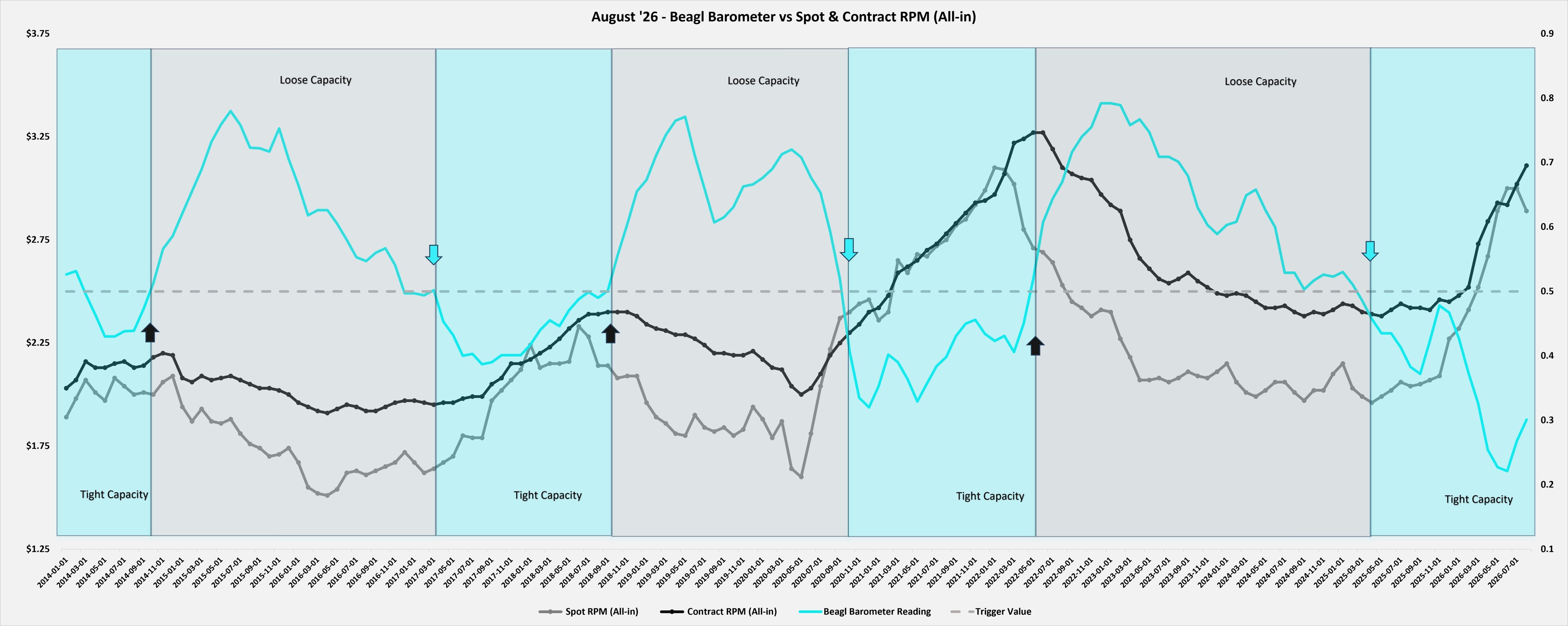
The Beagl Barometer remains below its 50-point trigger threshold in August 2026, but has materially turned up, signaling a potential bottom in a deeply tight capacity regime. The market underperformed normal seasonal softness, with capacity metrics turning constructive and demand slowing.
Broker spot rates moved back below shipper contract rates, which continue to reset higher. We are expecting shipper contract rates to continue upward to approximately $3.19/mi by the end of the year as bid season approaches. This level of contract rates should produce more robust routing guides.
The Beagl Barometer is a logistic-regression–based capacity regime detection model designed to identify inflection points in the freight market before they show up in rates. It continuously analyzes market structure and pricing behavior, assigning a normalized reading from 0–100 with a critical trigger value of 50 separating tight and loose capacity regimes.
| All employees, truck transportation | Tight |
| Active FMCSA Class 8 registrations | Tight |
| Class 8 net orders | Loose |
| Real personal consumption expenditures | Neutral |
| Industrial production, manufacturing | Slightly tight |
| Merchant wholesaler sales | Tight |
| Inventory to sales ratio | Tight |
| Truck tonnage index | Neutral |
| DAT load to truck ratio | Tight |
| SONAR OTRI | Tight |
| ATRI operating cost vs spot rates | Loose |
| Dry van contract to spot premium | Tight |
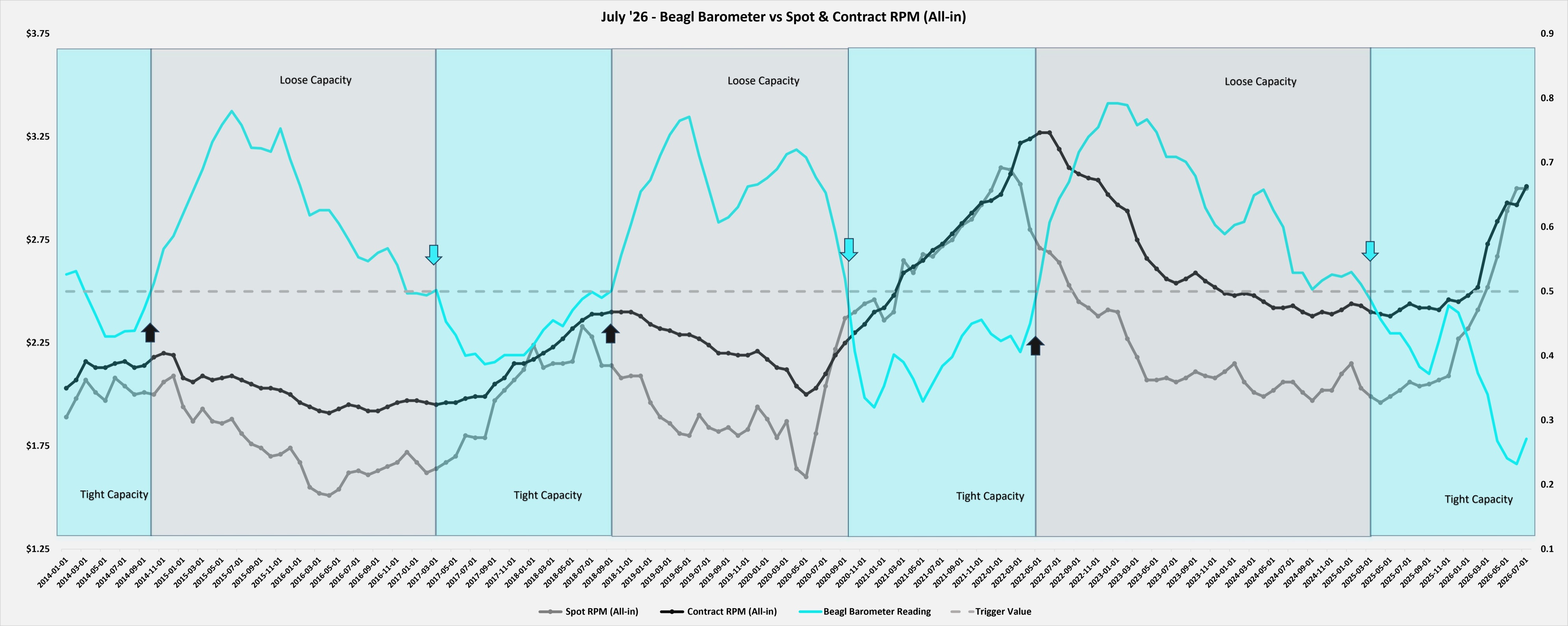
The Beagl Barometer moved further below its 50-point trigger threshold in July 2026, continuing the tightening trend that began in April of 2025.
Spot rates and contract rates started to normalize with contract rates resetting above spot rates marginally, we expect to continue to see higher contract resets throughout bid season.
The Beagl Barometer is a logistic-regression–based capacity regime detection model designed to identify inflection points in the freight market before they show up in rates. It continuously analyzes market structure and pricing behavior, assigning a normalized reading from 0–100 with a critical trigger value of 50 separating tight and loose capacity regimes.
| All employees, truck transportation | Tight |
| Active FMCSA Class 8 registrations | Tight |
| Class 8 net orders | Loose |
| Real personal consumption expenditures | Neutral |
| Industrial production, manufacturing | Slightly tight |
| Merchant wholesaler sales | Slightly tight |
| Inventory to sales ratio | Tight |
| Truck tonnage index | Tight |
| DAT load to truck ratio | Slightly tight |
| SONAR OTRI | Tight |
| ATRI operating cost vs spot rates | Loose |
| Dry van contract to spot premium | Tight |
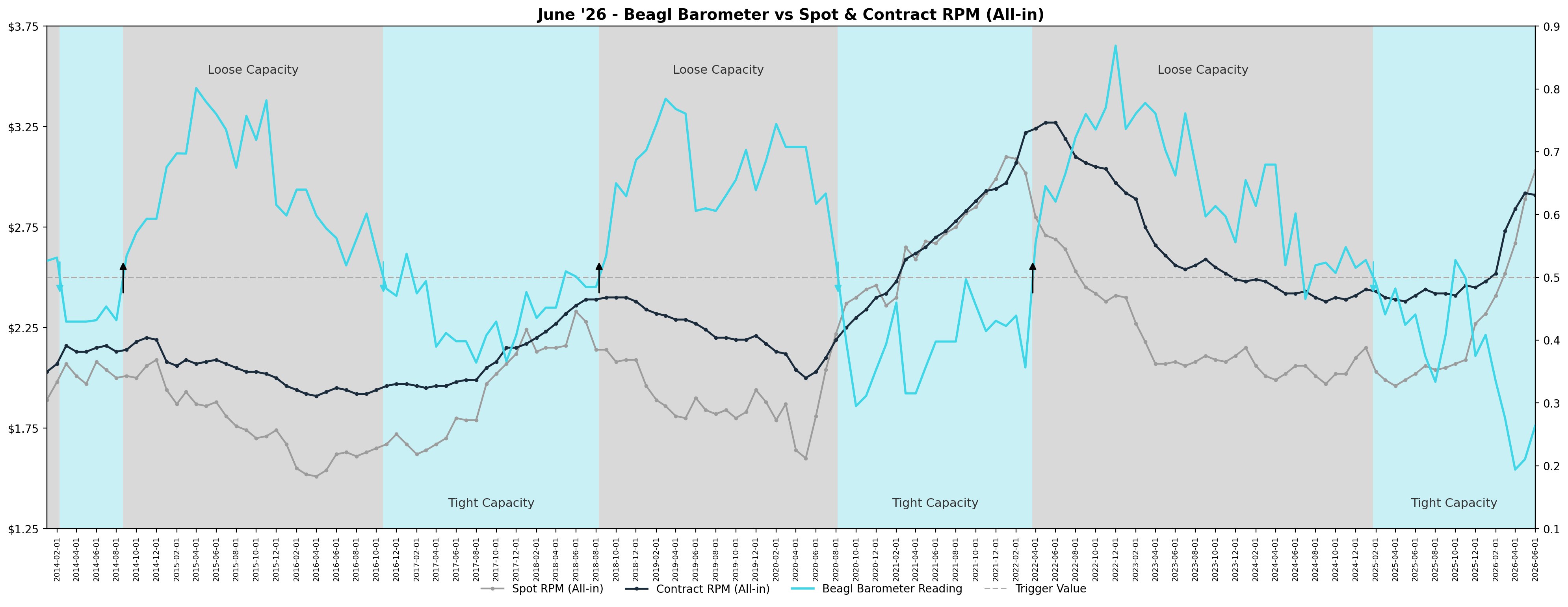
The Beagl Barometer remained below its 50-point trigger threshold in June 2026, registering a reading of 26, an improvement over the record low reading from May. This was driven mostly by improvements in supply, with Class 8 truck sales exploding year over year and carrier operating margins improving due to increased spot rates against a backdrop of falling fuel prices. The market has seemed to stabilize from the Covid-like panic in May.
Spot rates have moved above contracts and finished the month there for the first time since May 2021, which was followed by a 23% increase in contract rates before the cycle peaked. Contract rates will continue to reset higher from here.
The Beagl Barometer is a logistic-regression–based capacity regime detection model designed to identify inflection points in the freight market before they show up in rates. It continuously analyzes market structure and pricing behavior, assigning a normalized reading from 0–100 with a critical trigger value of 50 separating tight and loose capacity regimes.
| All employees, truck transportation | Tight |
| Active FMCSA Class 8 registrations | Tight |
| Class 8 net orders | Neutral |
| Real personal consumption expenditures | Neutral |
| Industrial production, manufacturing | Slightly tight |
| Merchant wholesaler sales | Slightly tight |
| Inventory to sales ratio | Tight |
| Truck tonnage index | Tight |
| DAT load to truck ratio | Slightly tight |
| SONAR OTRI | Tight |
| ATRI operating cost vs spot rates | Slightly tight |
| Dry van contract to spot premium | Tight |
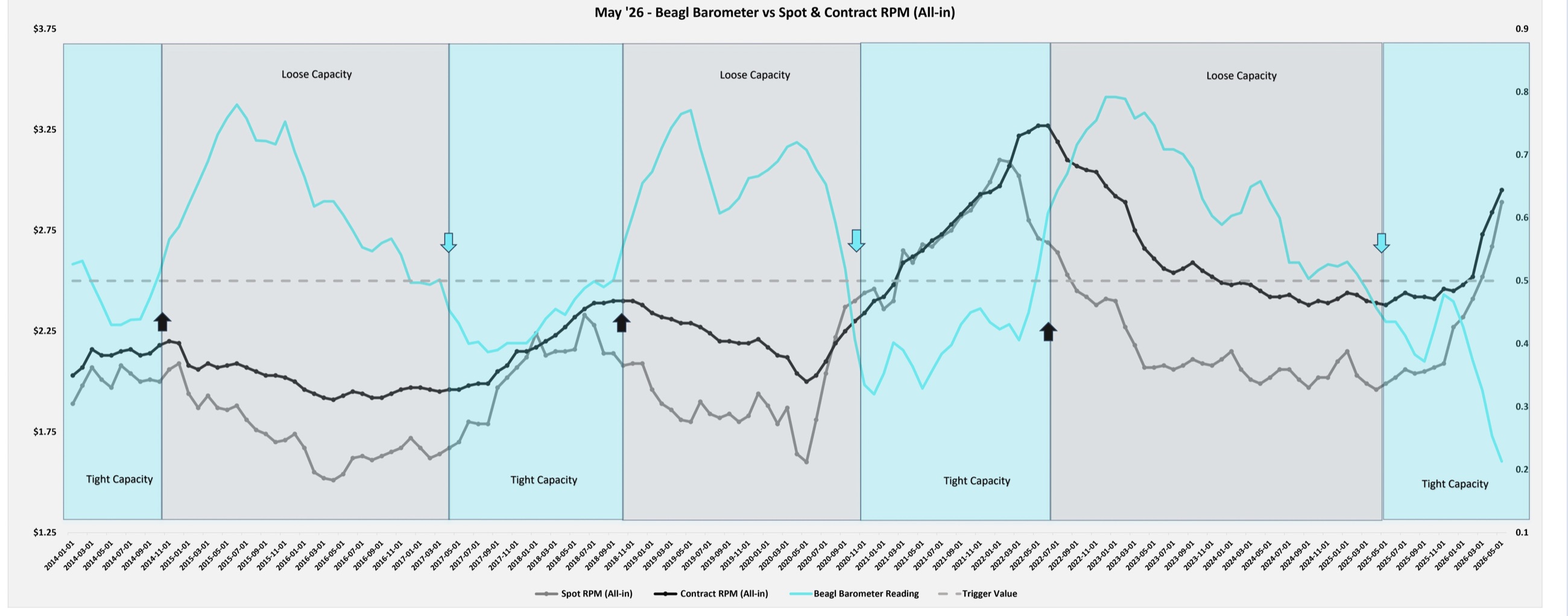
The Beagl Barometer remained below its 50-point trigger threshold in May 2026, registering a reading of 21, and falling to its lowest reading ever! These are Covid-like market conditions. The Barometer crossed over its trigger a year ago in April 2025 predicting the well-recognized tight capacity regime months before the market realized that the supply-driven freight rate recovery was underway. It is worthy to note that Dry Van Spot rates also registered their lowest reading of the deflationary cycle in the same month. The Beagl Barometer called the low.
The signal is driven primarily by recovery in Demand and continued tightness in Leading Indicator sub-indices, both registering well into tightening territory. Active FMCSA Registrations and All Employees, Truck Transportation have declined meaningfully from their 2024 peak despite a recovery in Class 8 net orders which have started the year off strong as fleets are replacing ageing equipment, a welcome shift that should improve Carrier OOS levels for equipment safety violations.
The leading indicators are the most acute: DAT Load-to-Truck ratios exploded higher in May, SONAR’s OTRI is making new record highs, and the Contract-to-Spot premium continues to compress, implying broker gross margins of 1–3% on Contract loads. We are starting to see significant contract resets as broker margins cannot sustain the ongoing margin compression.
The Beagl Barometer is a logistic-regression–based capacity regime detection model designed to identify inflection points in the freight market before they show up in rates. It continuously analyzes market structure and pricing behavior, assigning a normalized reading from 0–100 with a critical trigger value of 50 separating tight and loose capacity regimes.
| All employees, truck transportation | Tight |
| Active FMCSA Class 8 registrations | Tight |
| Class 8 net orders | Neutral |
| Real personal consumption expenditures | Neutral |
| Industrial production, manufacturing | Slightly tight |
| Merchant wholesaler sales | Slightly tight |
| Inventory to sales ratio | Tight |
| Truck tonnage index | Tight |
| DAT load to truck ratio | Slightly tight |
| SONAR OTRI | Tight |
| ATRI operating cost vs spot rates | Slightly tight |
| Dry van contract to spot premium | Tight |
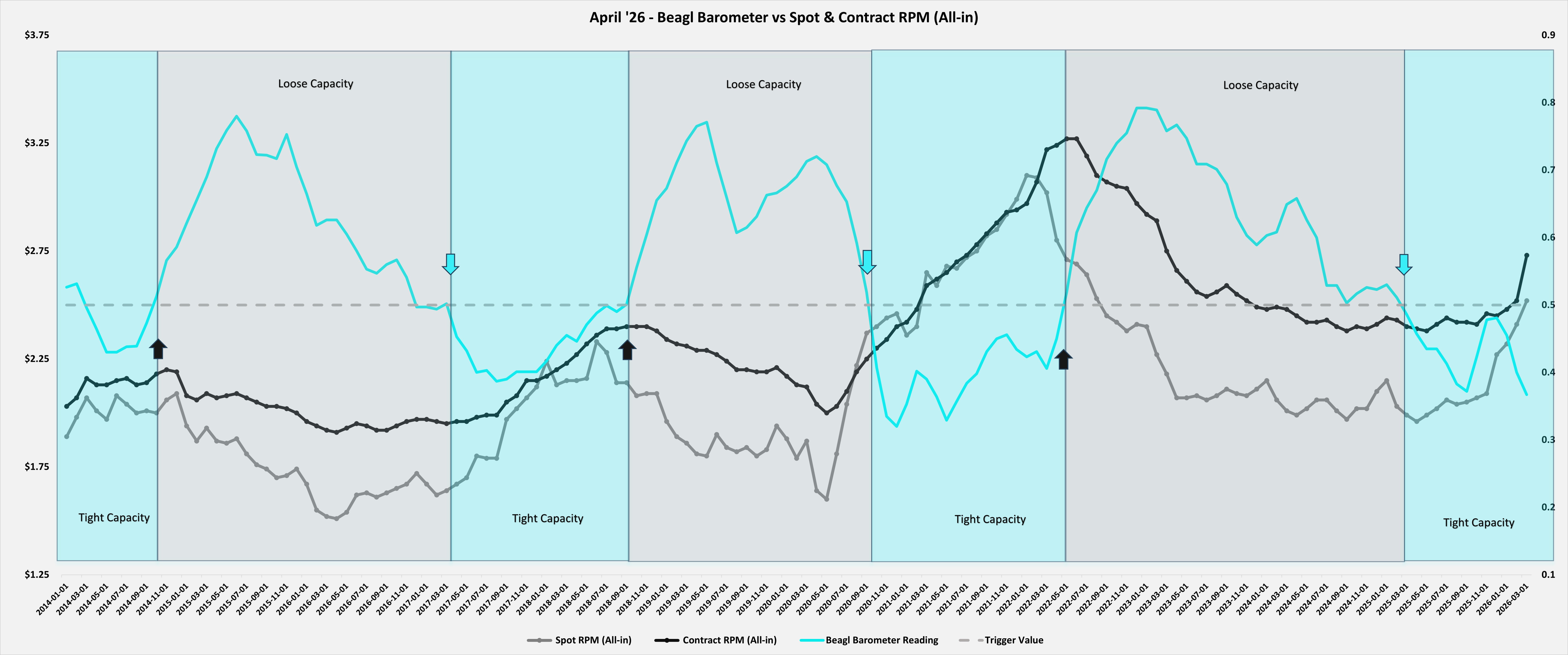
The Beagl Barometer remained below its 50-point trigger threshold in April 2026, registering a reading of 25, and falling to its lowest level since June of 2021. The Barometer crossed over its trigger a year ago in April 2025 predicting the well-recognized tight capacity regime months before the market realized that the supply-driven freight rate recovery was underway. It is worthy to note that Dry Van Spot rates also registered their lowest reading of the deflationary cycle in the same month. The Beagl Barometer called the low.
The signal is driven primarily by recovery in Demand and continued tightness in Leading Indicator sub-indices, both registering well into tightening territory. Active FMCSA Registrations and All Employees, Truck Transportation have declined meaningfully from their 2024 peak despite a recovery in Class 8 net orders which have started the year off strong as fleets are replacing ageing equipment, a welcome shift that should improve Carrier OOS levels for equipment safety violations.
The leading indicators are the most acute: DAT Load-to-Truck ratios improved in April but remain elevated, SONAR’s OTRI is continuing to hold near cycle highs, and the Contract-to-Spot premium is compressing. We are starting to see significant contract resets as broker margins cannot sustain the ongoing margin compression.
The Beagl Barometer™ is a proprietary capacity regime detection model. Readings are derived from publicly available freight market data and proprietary logistic regression analysis. For informational purposes and internal pricing team use only. Past regime behavior is not indicative of future market outcomes. © 2026 Beagl. All rights reserved.